Circle8
Home About Strategic Collaboration Global Design Series ↳ Editorial Index Testimonials Round Table ↳ Submit an Opportunity Contact
Hagia Sophia
← Turkey Editions

Precinct · Editorial · Istanbul

The Building That Refused to Forget

What a 1,500-Year-Old Structure Taught Me About Architecture, Adaptation and the Stories We Choose to Keep

Share this edition

"I arrived expecting to admire architecture. I left reflecting on humanity."

01

Some Buildings Demand Silence

There are buildings that impress you. Then there are buildings that change the way you think. Hagia Sophia belongs firmly in the second category.

Before arriving in Istanbul, I knew the history. I knew it had been a church, then a mosque, then a museum, and that it functions once again as a mosque today. I thought that was enough context. It wasn't. Nothing I'd read prepared me for the experience of actually stepping inside.

The exterior gives little indication of what awaits. Then the doors open. The scale is breathtaking — not in the way that a tall glass tower is breathtaking, but in the way that stops you mid-step and makes you go quiet. The dome appears suspended above you. The light seems to hover in the air. I stood there for a long moment just adjusting to what I was looking at.

I spent most of an afternoon inside. I can tell you now that Hagia Sophia is not something you visit. It is something you experience.
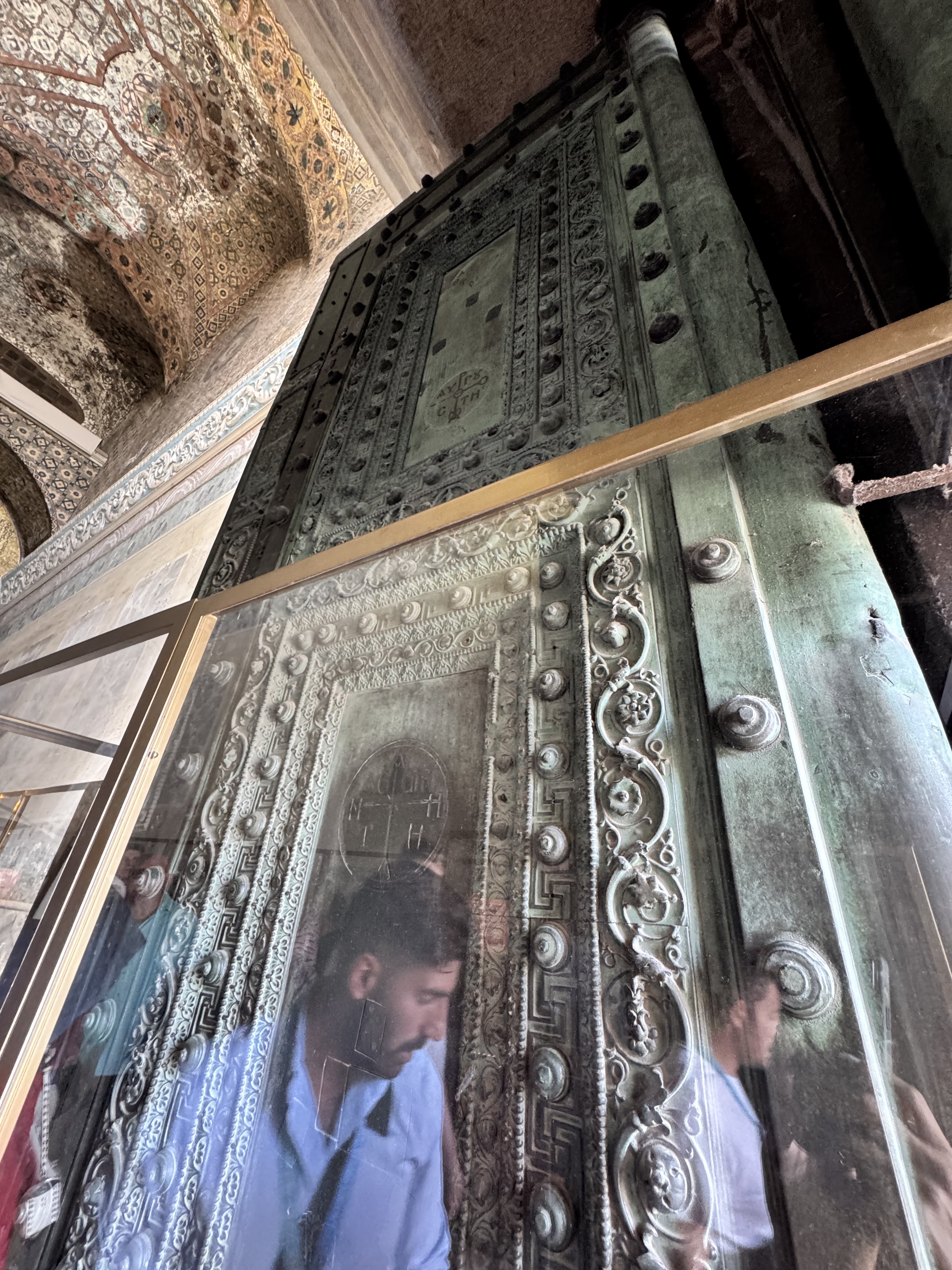
Hagia Sophia entrance
The entrance doors — bronze in continuous use for over a thousand years. The weight of them is the first thing you feel.
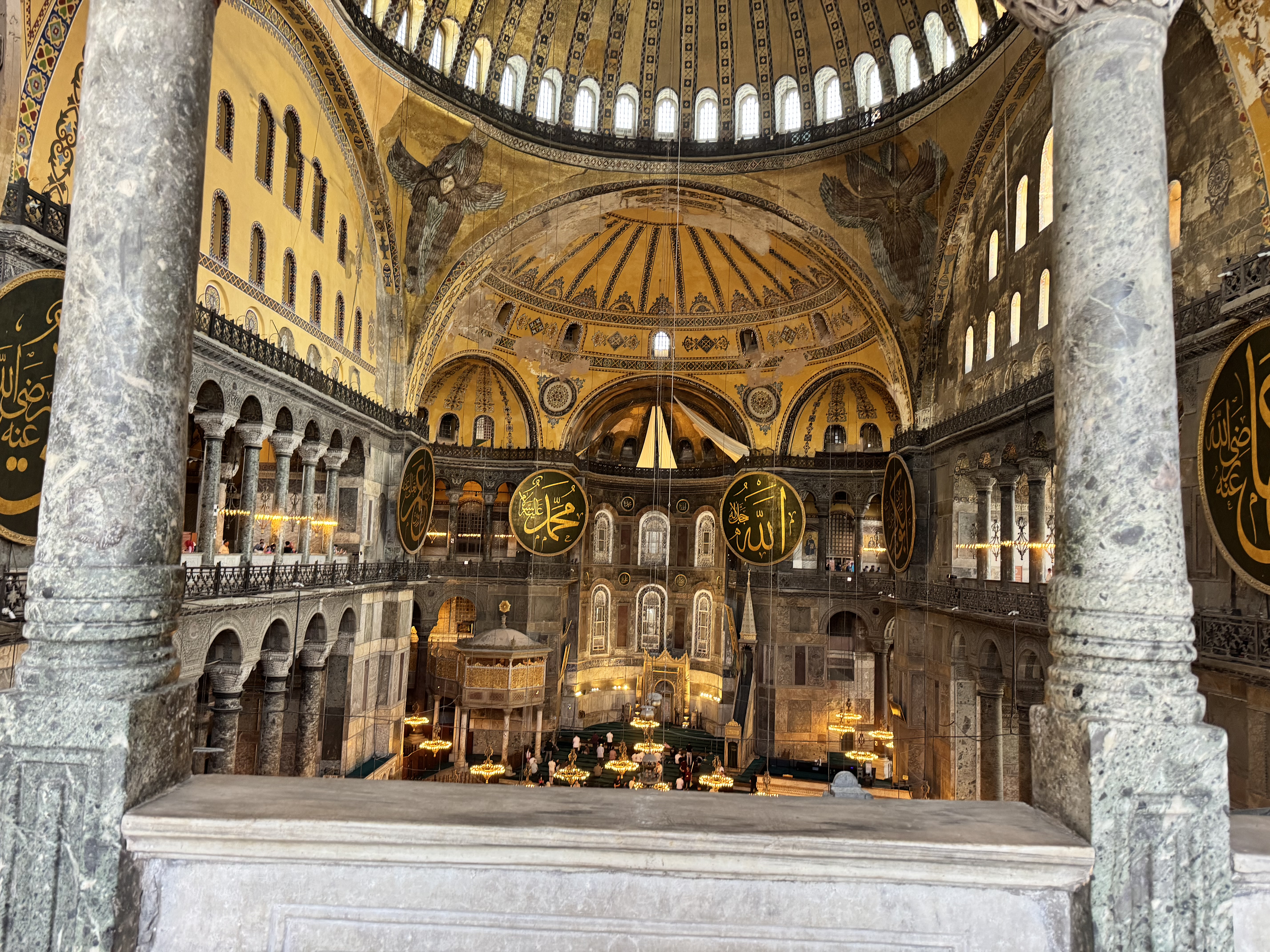
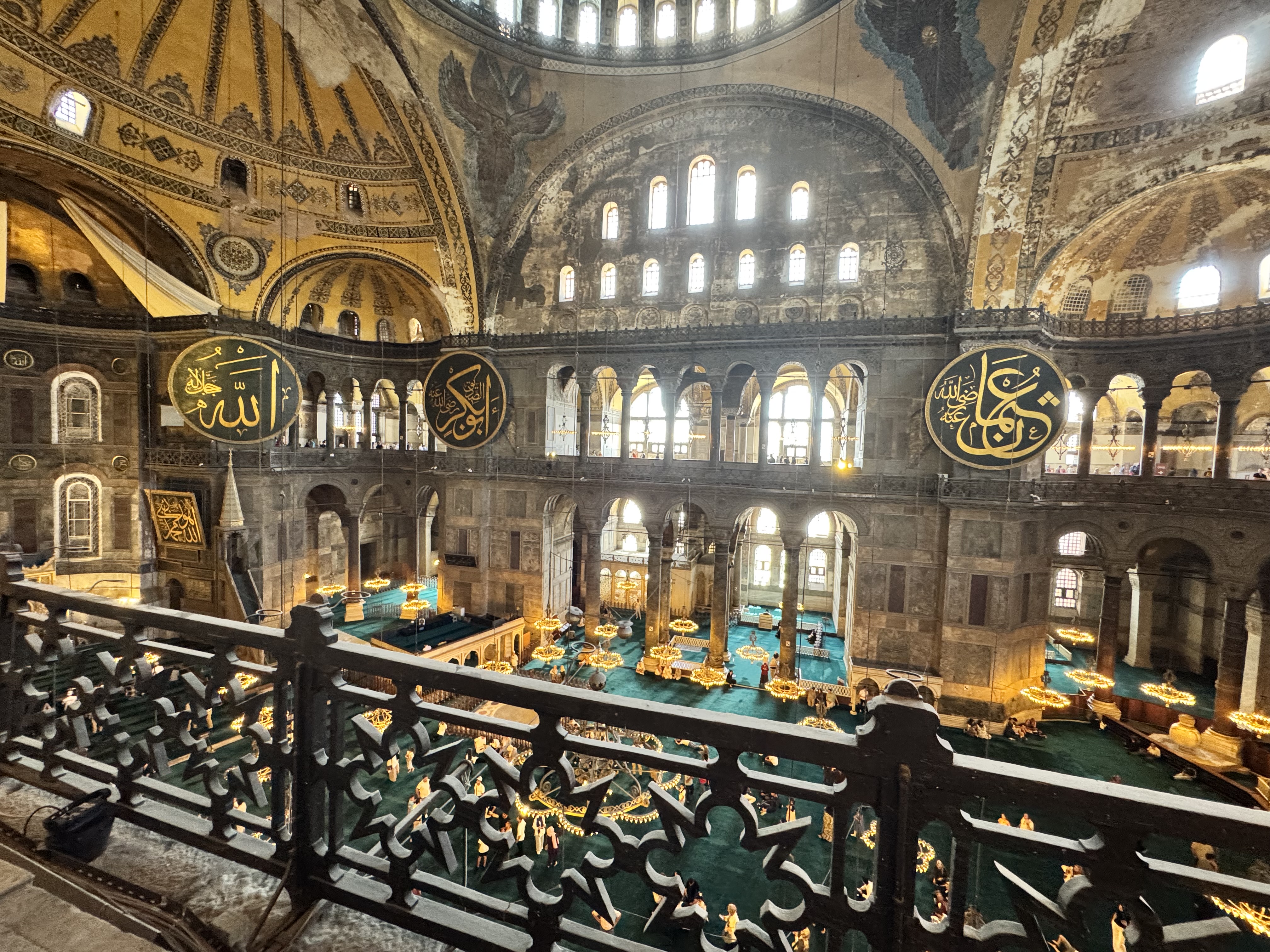
The full sweep of the nave
The full sweep of the nave — Byzantine mosaics, Ottoman calligraphy medallions and the great dome, all in the same breath
02

A Building Written By Civilisations

As someone who spends a lot of time thinking about the built environment, what impressed me most wasn't simply the architecture. It was the evidence of every civilisation that had touched the building — and the decision, made again and again across fifteen centuries, not to erase what came before.

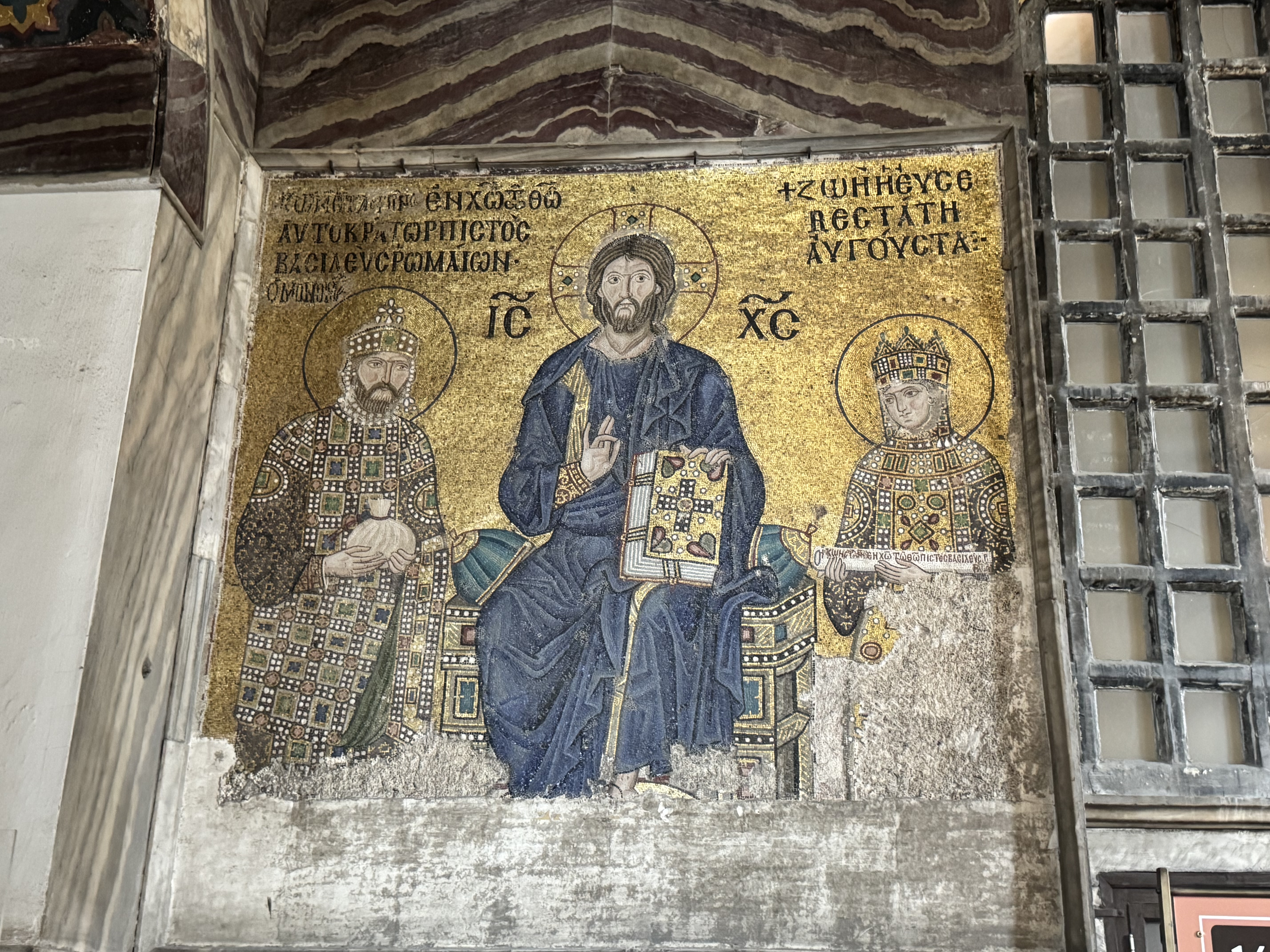
Christian mosaics remain visible alongside Islamic calligraphy. Ottoman additions coexist with Byzantine craftsmanship. Centuries of restoration, adaptation and reinvention sit side by side — not as a museum curation exercise, but as the natural accumulation of people who lived in and around this building and left their mark on it.

As you move through the galleries, details begin to emerge that most visitors walk past. A faded mosaic. A worn marble floor. A carved inscription. A repaired column. Motifs from different faiths, different eras, different hands. Together they tell the story of a building that has continuously evolved while remaining true to itself.

That, I think, is an almost impossible thing to achieve. And Hagia Sophia has been achieving it for nearly one and a half millennia.

03

Architecture That Chose Humility

I arrived expecting a monument to power. That's a reasonable expectation — this is one of the most fought-over buildings in human history. Instead, I found something closer to a monument to coexistence.

Throughout history, different empires could easily have erased what came before them. Many didn't. Not because the previous work was useful to them, or convenient to preserve, but because — in some instinctive way — it was recognised as belonging to something larger than any single ruler or religion.

Standing beneath that dome, surrounded by visitors from every culture, nationality and belief system I could imagine, I had a strong sense that the building had evolved beyond religion. It had become a shared human achievement. There was a collective quiet, a collective respect, that I haven't experienced anywhere else.

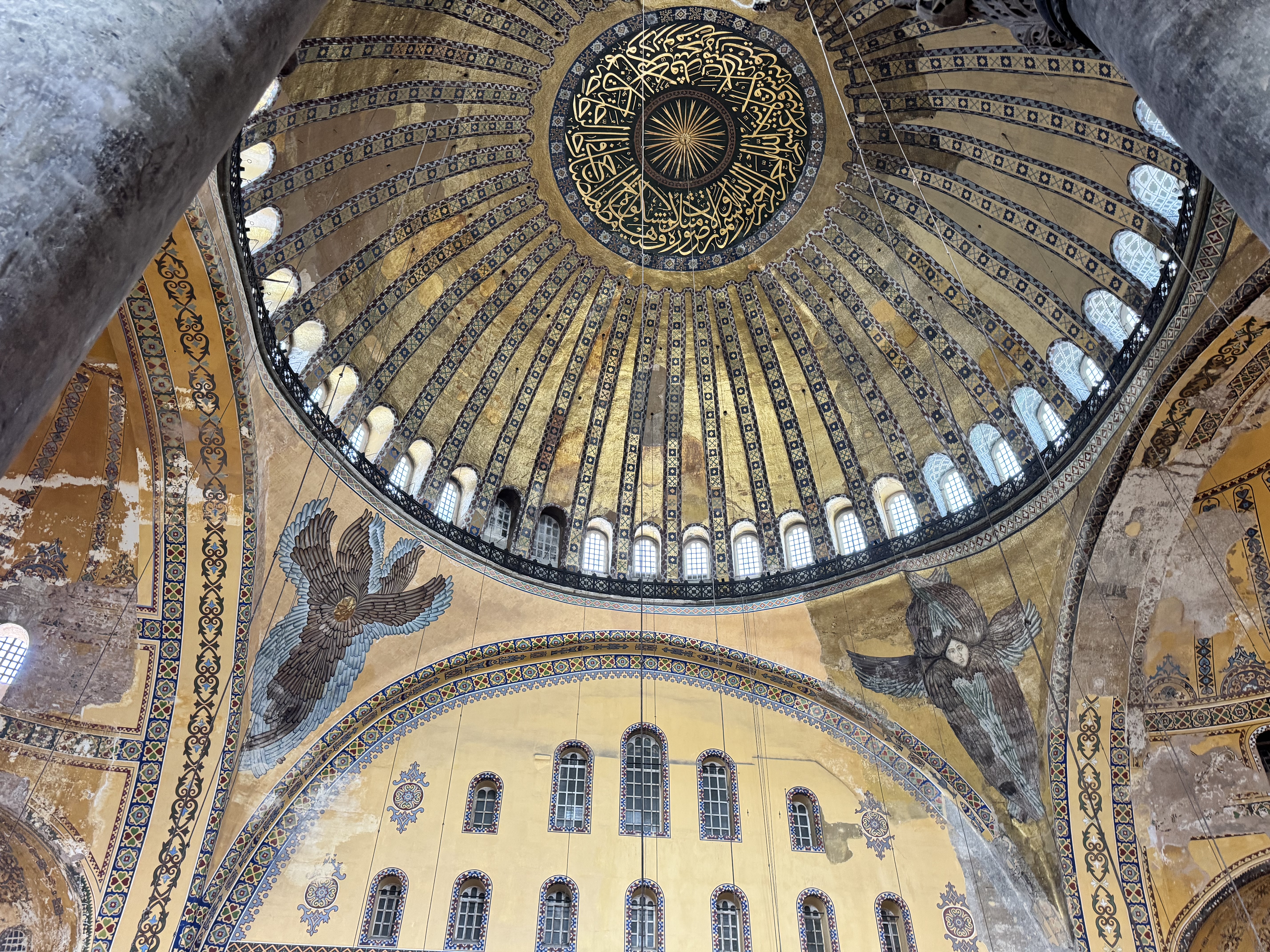
Part of that feeling is architectural in origin. The architects — Isidore of Miletus and Anthemius of Tralles — were mathematicians who understood that light was not a secondary consideration in architecture. It was the primary one. The ring of windows at the base of the dome creates an effect that Byzantine writers described as the dome suspended from heaven by a golden chain. In practice, what is happening is a masterclass in diffused, ambient illumination — light entering from all sides simultaneously, eliminating harsh shadows and creating a luminosity that feels almost sourceless. Achieved not through technology, but through geometry.

And yet for all that calculated grandeur, what stays with you as you move deeper into the building are the smallest things. Worn surfaces. Visible repairs. A marble floor polished by fifteen centuries of feet. The building operates at both scales simultaneously — the cosmic and the intimate — and somehow neither diminishes the other.

The dome interior
The dome interior — light entering from all sides, creating a luminosity that feels almost sourceless
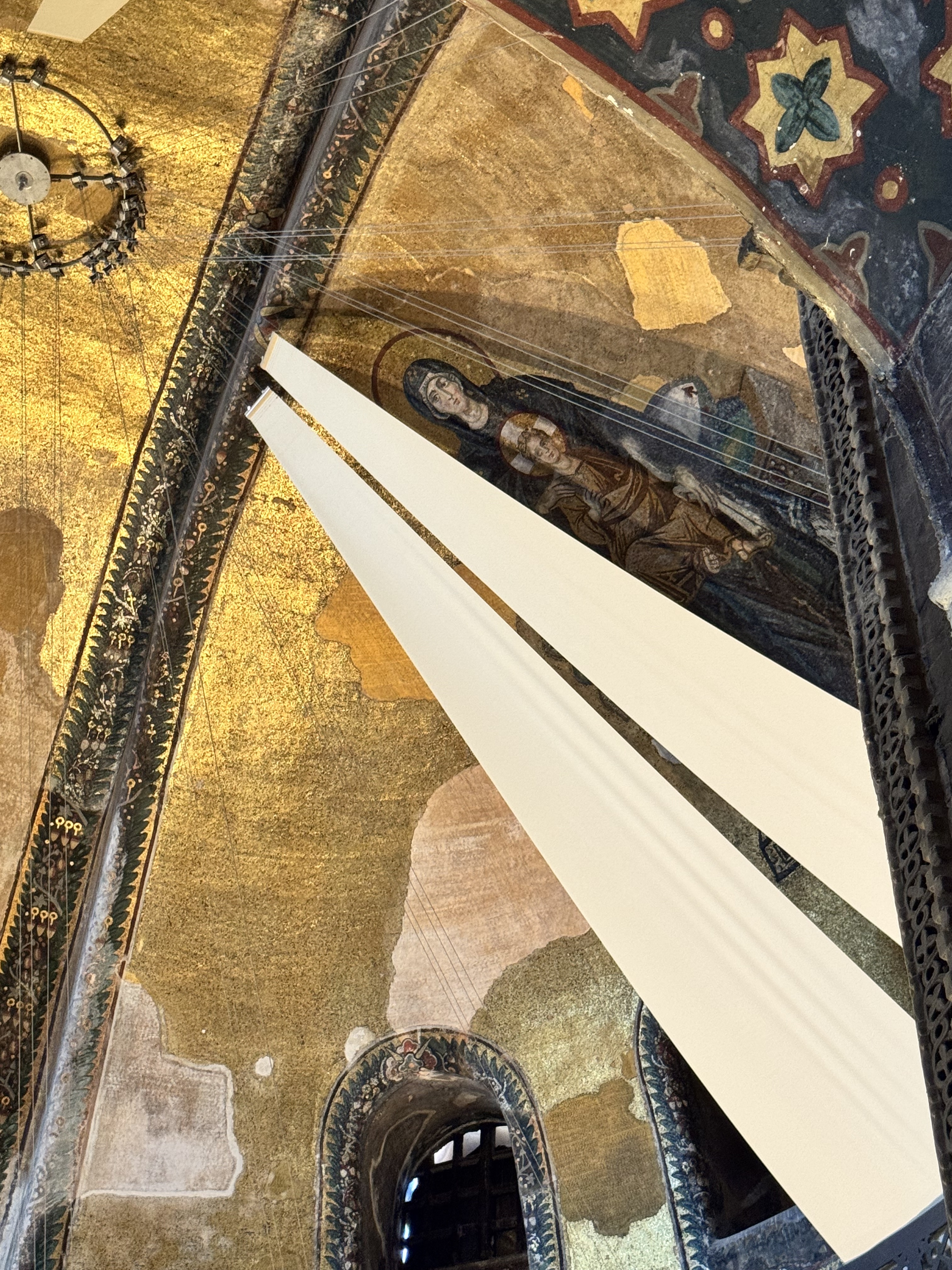
Gold mosaic ceiling
Gold mosaic ceiling — the dome's curvature and reflective surfaces calculated with astonishing precision
Byzantine mosaic detail
Byzantine Christ mosaic — preserved beneath plaster for centuries
The Deesis mosaic
The Deesis mosaic — 13th century, one of the finest surviving works of Byzantine art

"The most enduring buildings are not those that resist change. They are those robust enough to accommodate it — that have a structural and spatial generosity that allows each generation to find its own relationship with the space."

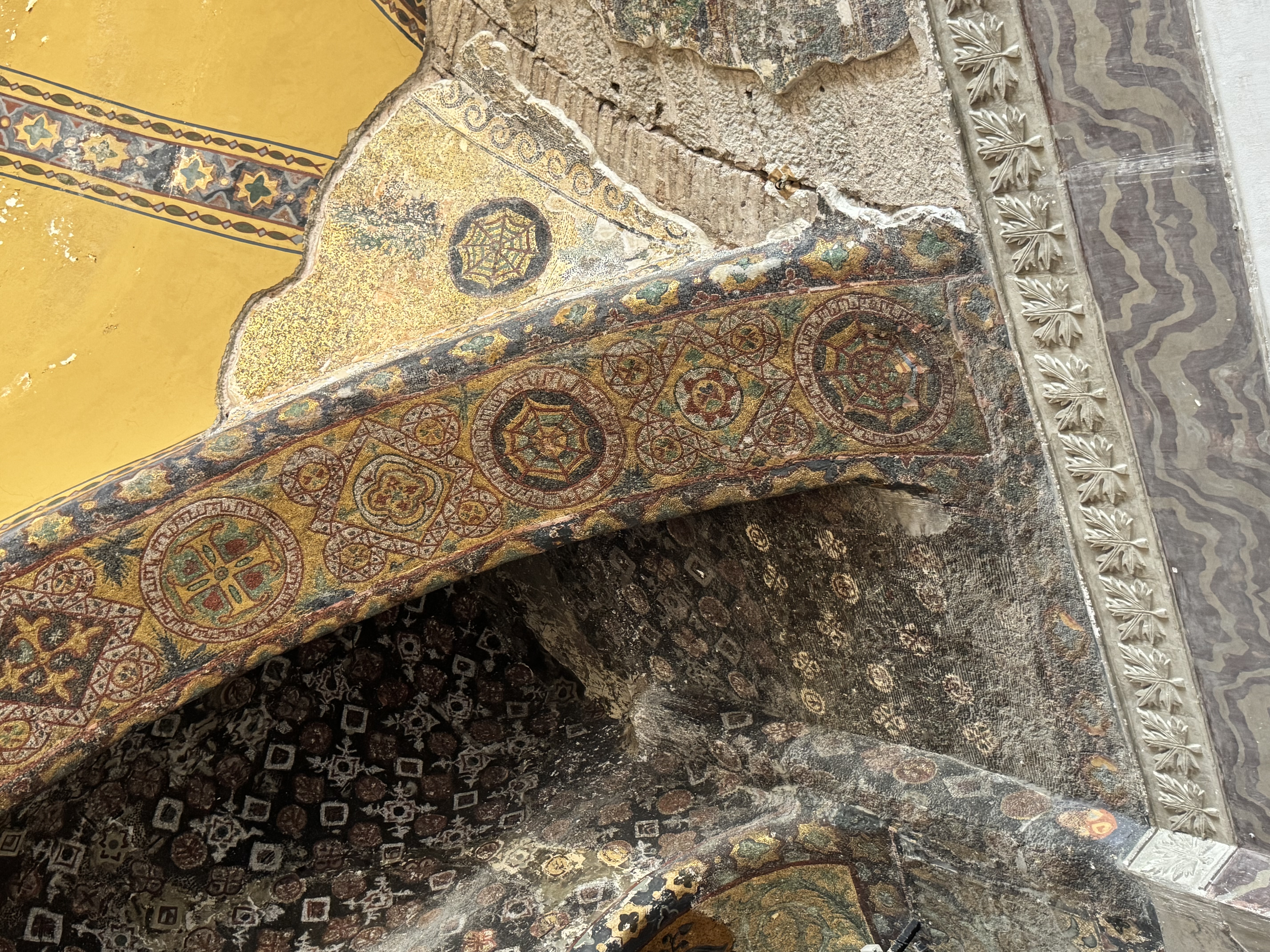
Faded mosaic detail
Faded mosaic detail — materials that make no attempt to hide fifteen centuries of age
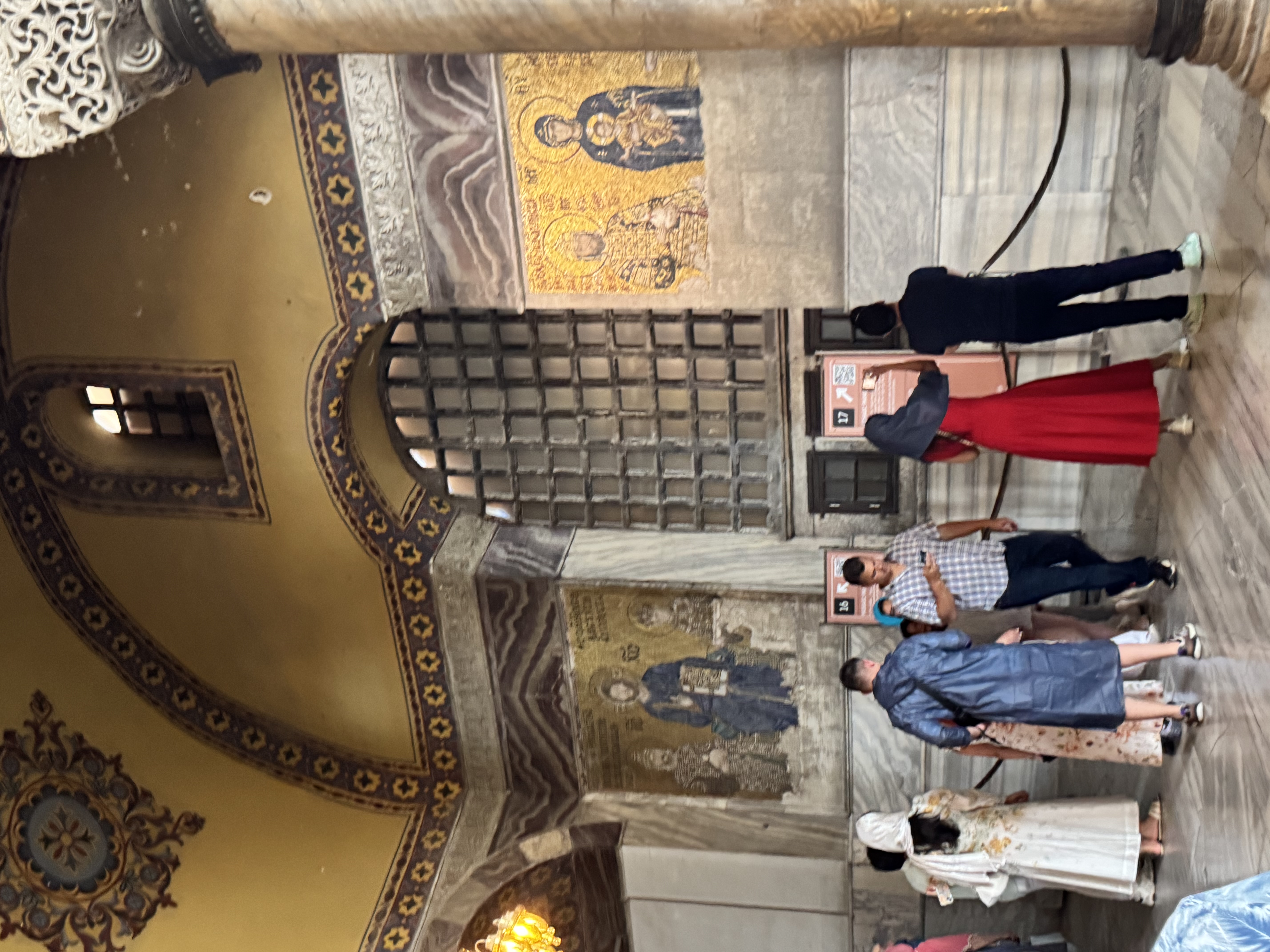
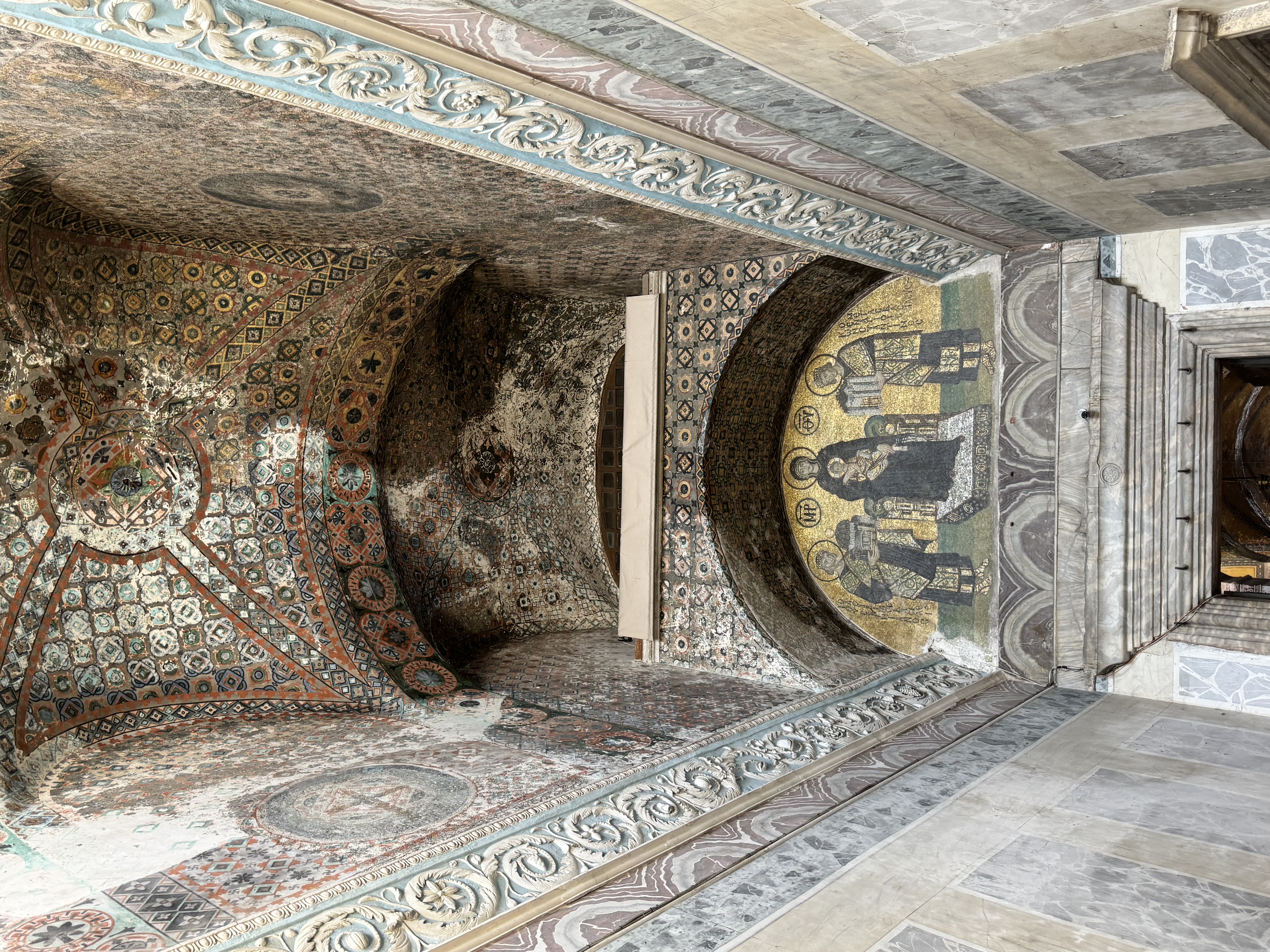
The inner narthex
The inner narthex — mosaic-covered vaults guiding visitors into the building for fifteen centuries
04

The Original Adaptive Reuse Project

Adaptive reuse is one of the most important conversations in architecture and construction right now. We talk about it as though it's a contemporary idea — a response to sustainability pressures, to embodied carbon, to the cost of demolition and rebuild. But Hagia Sophia may be one of the earliest and most successful examples in history.

For almost fifteen centuries, this building has adapted to changing cultures, technologies, governments and religious practices. Its core identity has remained intact. It continues to serve its community while preserving the stories of those who came before.

The lesson for anyone working in design and construction is a direct one: relevance is not achieved through demolition. It is achieved through thoughtful adaptation. The most sustainable building is not the most efficiently built new one. It is the one that people have cared enough about to keep.

05

What Sydney Can Learn

Sydney is a young city. Many of our most celebrated buildings are little more than a century old, and we treat that youth as though it's a limitation — as though we're still waiting to accumulate the kind of depth that makes a place feel genuinely layered.

Hagia Sophia offers a different way of thinking about it. Great cities are not built by replacing their history. They are built by adding to it carefully, generation by generation, in ways that leave room for the next contribution.

The Rocks, Walsh Bay, Paddington — these places resonate because they contain layers of time. Different eras have contributed to a shared story. Hagia Sophia simply shows what those layers look like after fifteen centuries of people choosing, again and again, to add rather than erase.

The result is not a building. It is a living record of civilisation. And it still has its doors open.

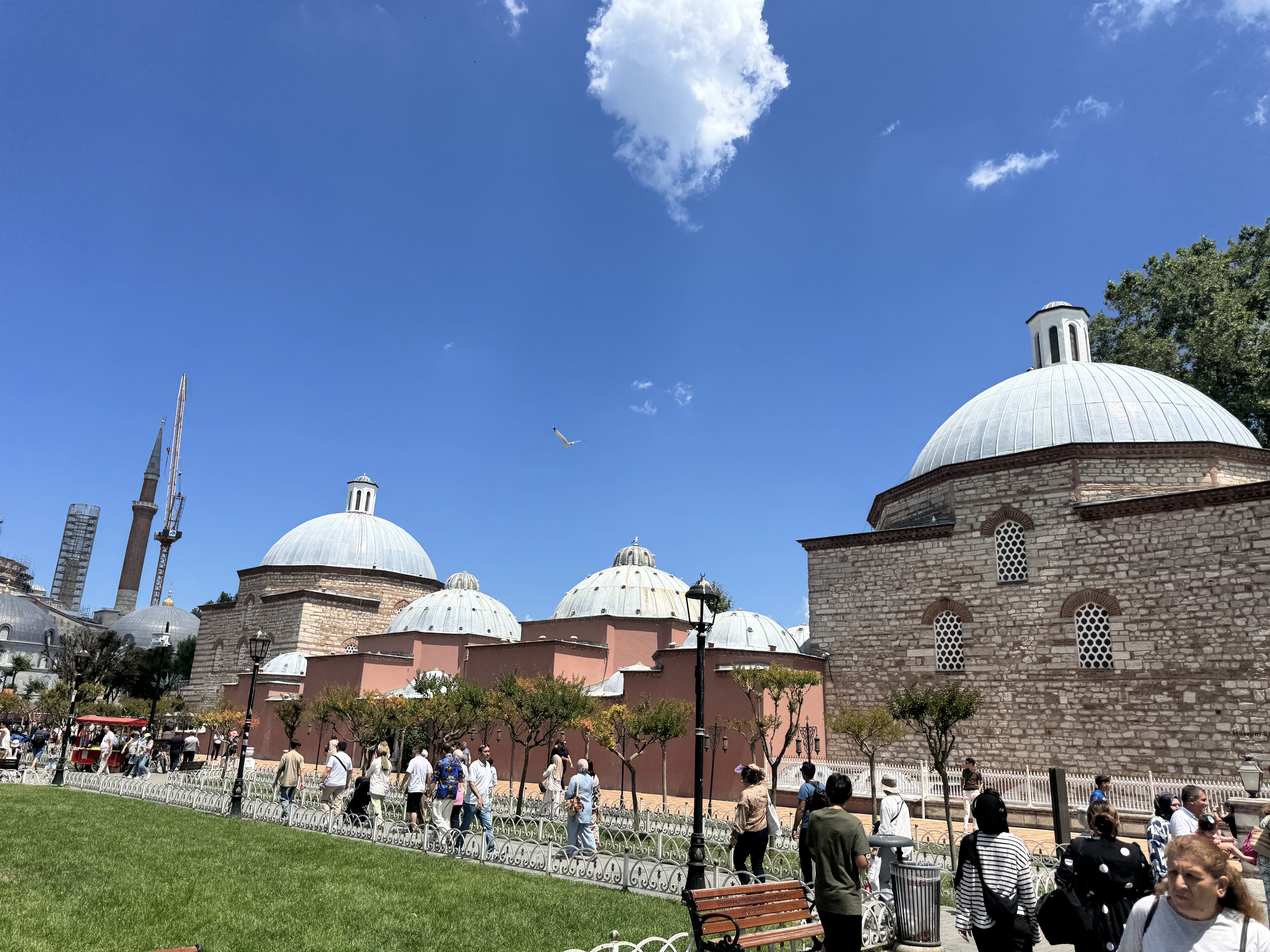
Hagia Sophia surroundings
Hagia Sophia's surrounding buildings reveal centuries of architectural evolution
06

What I Brought Home

Unlike the Galataport precinct, which I discovered unexpectedly while walking the waterfront, Hagia Sophia was one of the places I had most anticipated visiting before arriving in Istanbul. It had lived in my imagination for years, and experiencing it in person not only met those expectations — it exceeded them.

What I brought back was less a set of principles and more a recalibration of expectation. I had assumed that a building this old, this significant, this fought-over, would feel heavy. Definitive. Closed.

It felt none of those things. It felt genuinely alive — full of people, full of light, full of the very specific energy that comes from a place that has been continuously inhabited and cared for and argued over and loved for fifteen hundred years.

The buildings we build today will not survive fifteen centuries. But the question Hagia Sophia asks is worth sitting with: are we building things that people will care enough to keep? Are we creating places that accumulate meaning rather than expire it?

I don't have a tidy answer. But I came back asking the question differently.

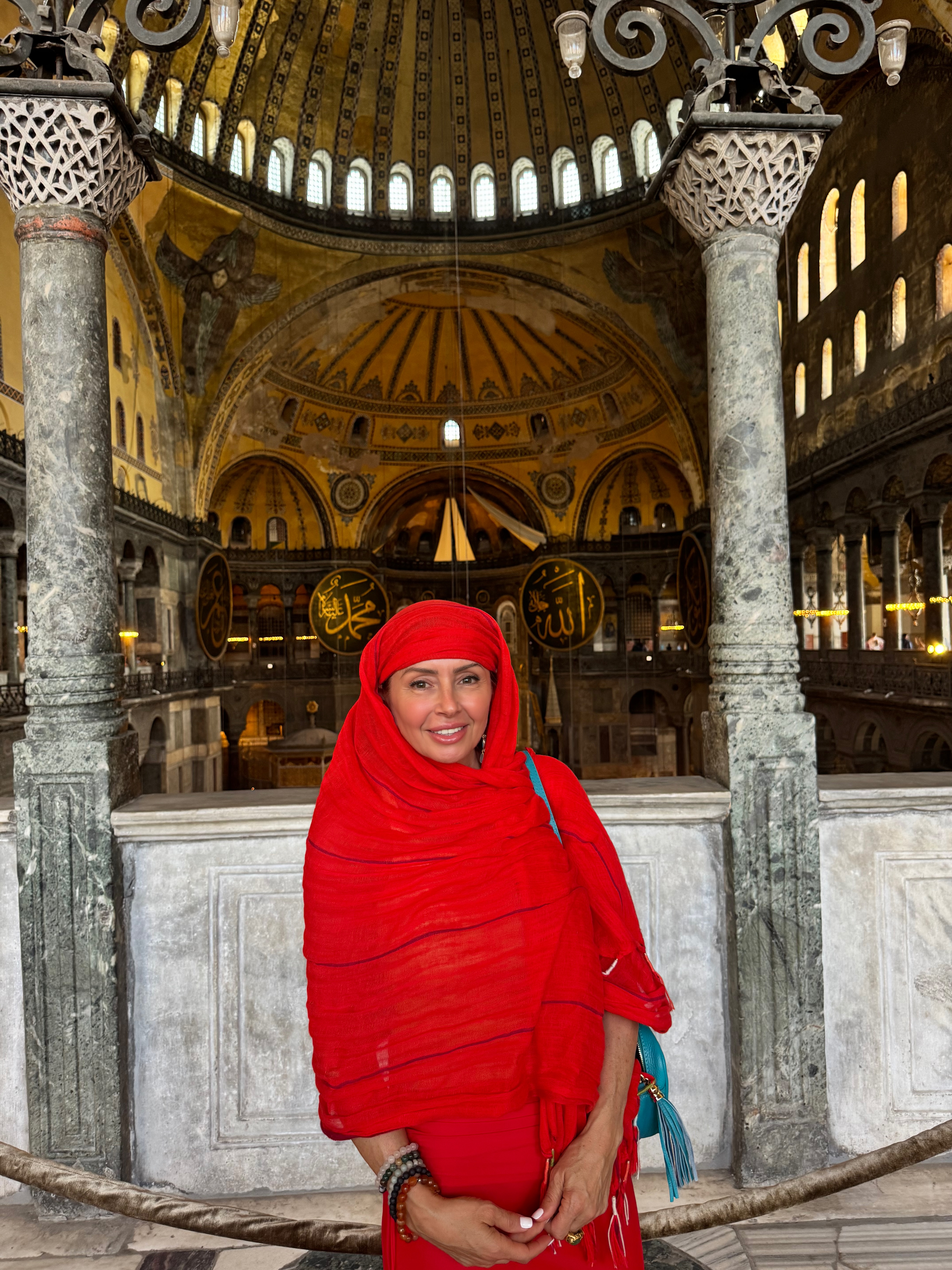
Inside Hagia Sophia
Inside the nave — the photographs never quite capture what the space actually feels like when you're standing in it
Take This to the Round Table

A question worth eight perspectives:

"Are we building things in Australia that people will care enough to keep — or are we creating places that accumulate value at opening and lose it every year after?"

Bring this question to a Circle8 Round Table →
A Note on How We Work

The Circle8 Global Design Series is not a travel blog. It's a research practice. When we visit a building like Hagia Sophia, we're looking at it through the lens of our work — the residential developments, commercial fitouts and construction projects we advise on in Australia. We're asking: what does this mean for us? What can we take back?

Sometimes the answer is a specific material or detail. Sometimes it's a principle. Sometimes it's just a recalibration of what's possible — a reminder that the standard we're holding ourselves to should be set by the best work being done anywhere in the world, not just the best work being done locally.

Istanbul gave us that recalibration. I hope this edition gives you something useful too.

Share this edition

Circle8 Global Design Series

The world's greatest environments inspire us to think differently.

More editions coming soon. In the meantime, let's talk about what great design could mean for your next project.

Next Edition: Topkapi Palace → Join a Round Table