Circle8
Home About Strategic Collaboration Global Design Series ↳ Editorial Index Testimonials Round Table ↳ Submit an Opportunity Contact
Topkapi Palace
← Turkey Editions

Palace · Editorial · Istanbul

Topkapi Palace

When Power Becomes Architecture

Share this edition

"What impressed me most was not the wealth itself. It was the scale of the lifestyle that wealth created."

01

A City Within a Palace

There are buildings that leave you in awe through scale, and there are buildings that reveal power through detail. Topkapi Palace does both. Perched above Istanbul, overlooking the Bosphorus and the city below, the palace was once the centre of the Ottoman Empire.

It housed the Sultan, his family, wives, servants and an extraordinary workforce of more than 5,000 people who supported life within its walls. Walking through the palace today, it feels less like a single building and more like a small city designed around privilege, hierarchy and influence.

The palace unfolds through a sequence of courtyards, gardens, pavilions and living quarters. Unlike Hagia Sophia, which feels heavy with spirituality and history, Topkapi feels deeply human. Its story is not about religion. It is about power.

The hierarchy of Ottoman society is embedded in the architecture itself. The closer one moved toward the Sultan, the more exclusive the spaces became. Private grounds have become public ones. Elaborate chambers have become exhibition rooms. Ornamentation that was once part of everyday life has become public display.
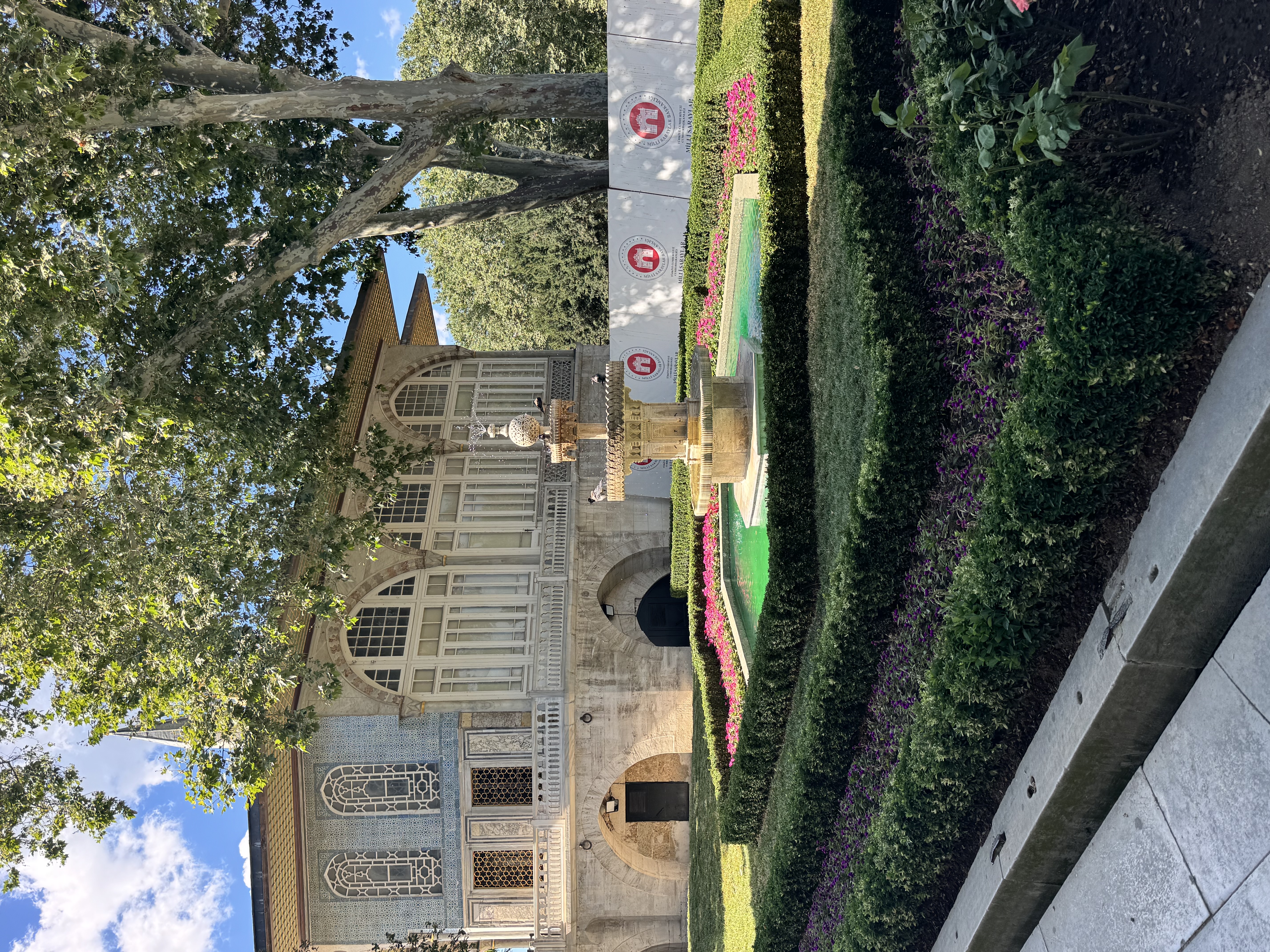
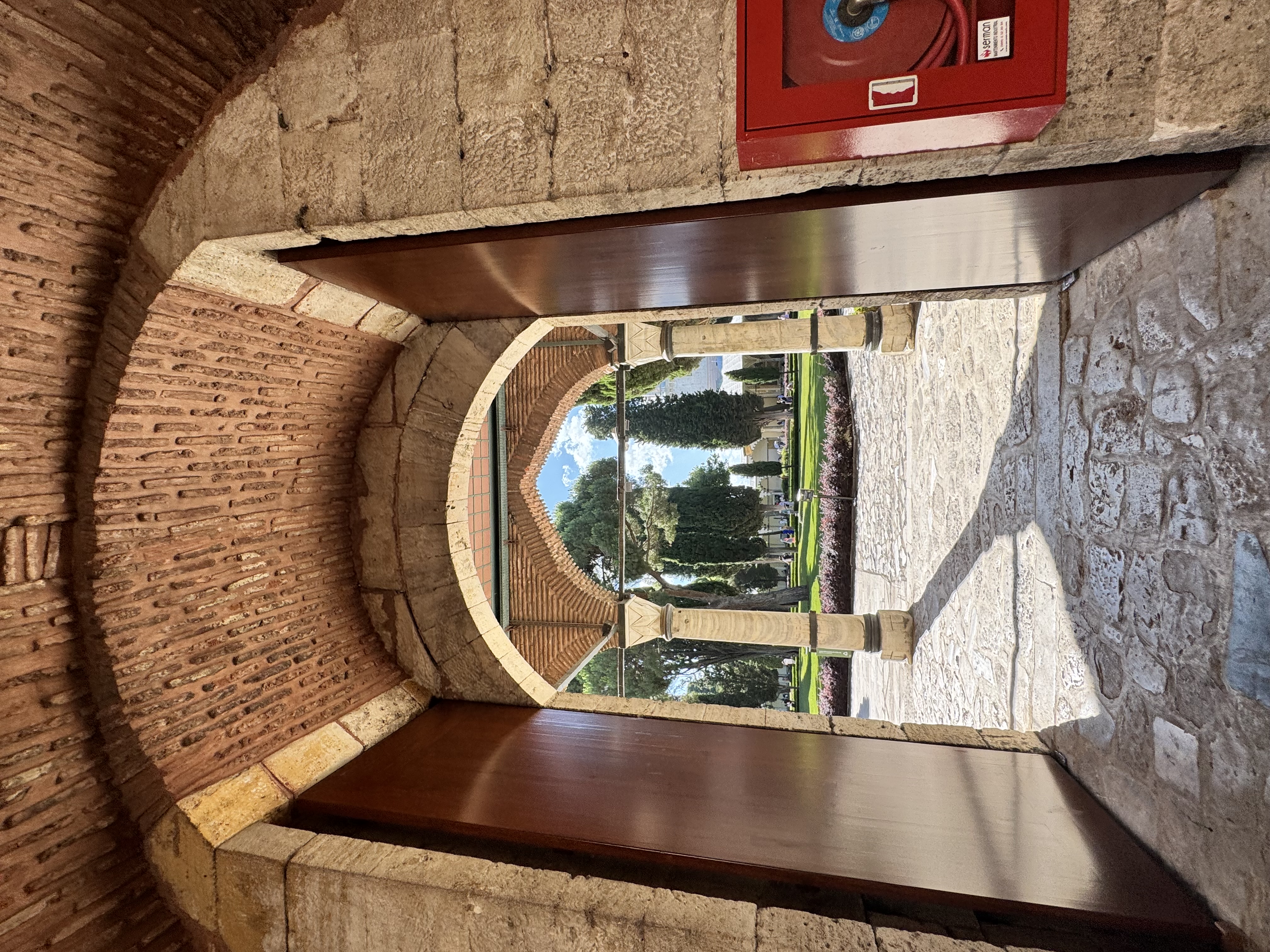
Topkapi Palace courtyard
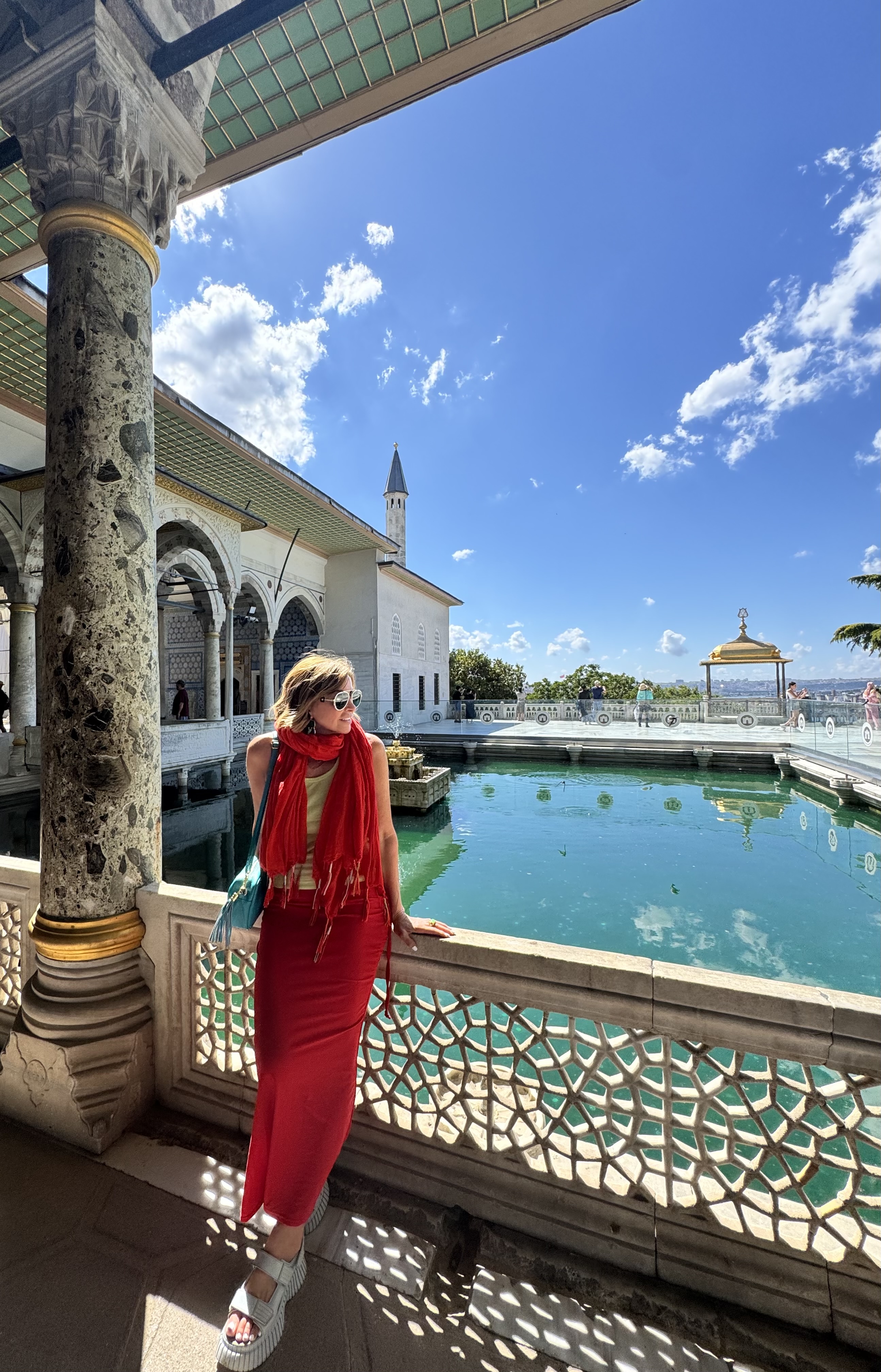
The palace reads as a sequence of thresholds, courtyards and private worlds
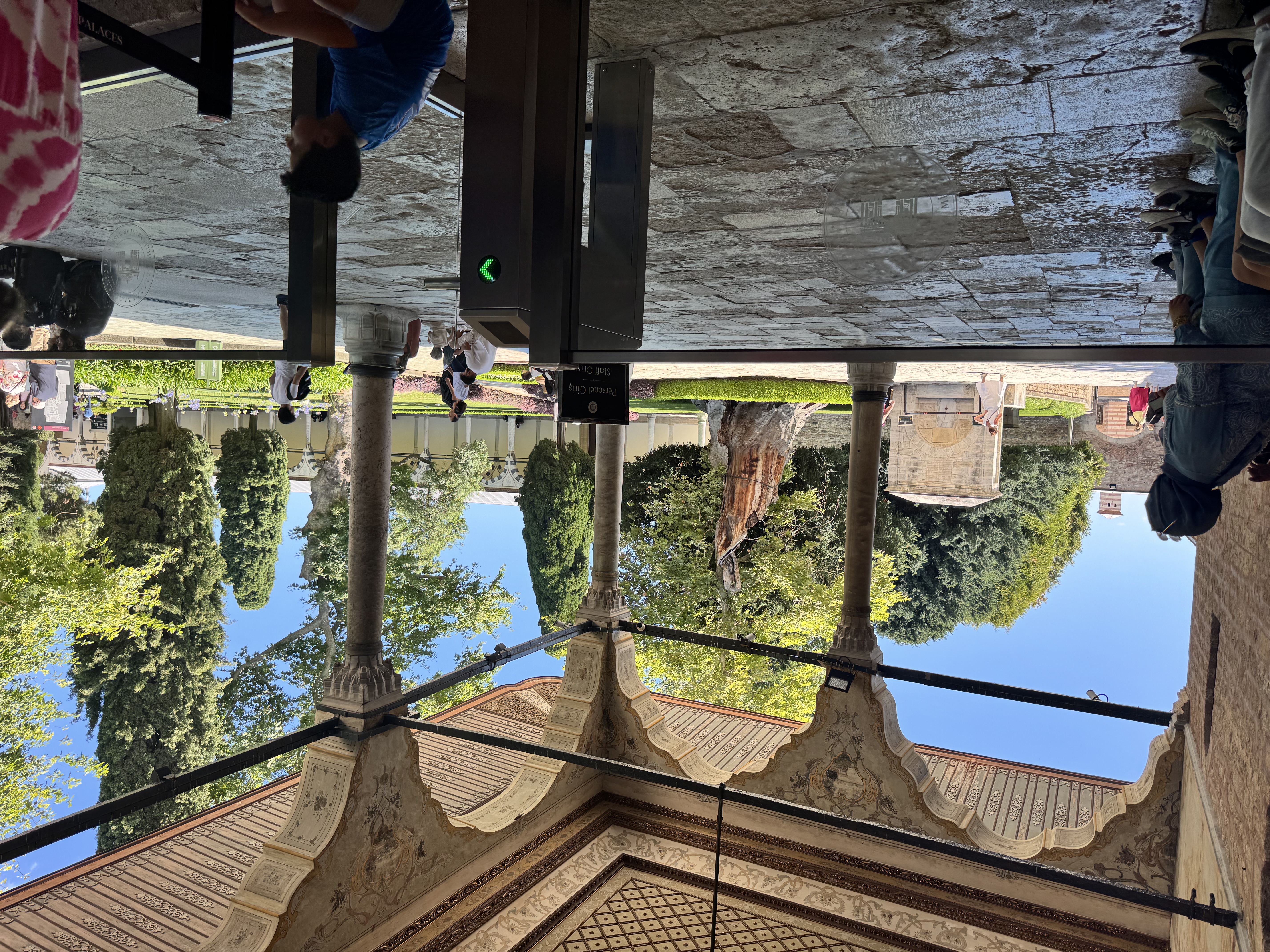
Topkapi Palace grounds
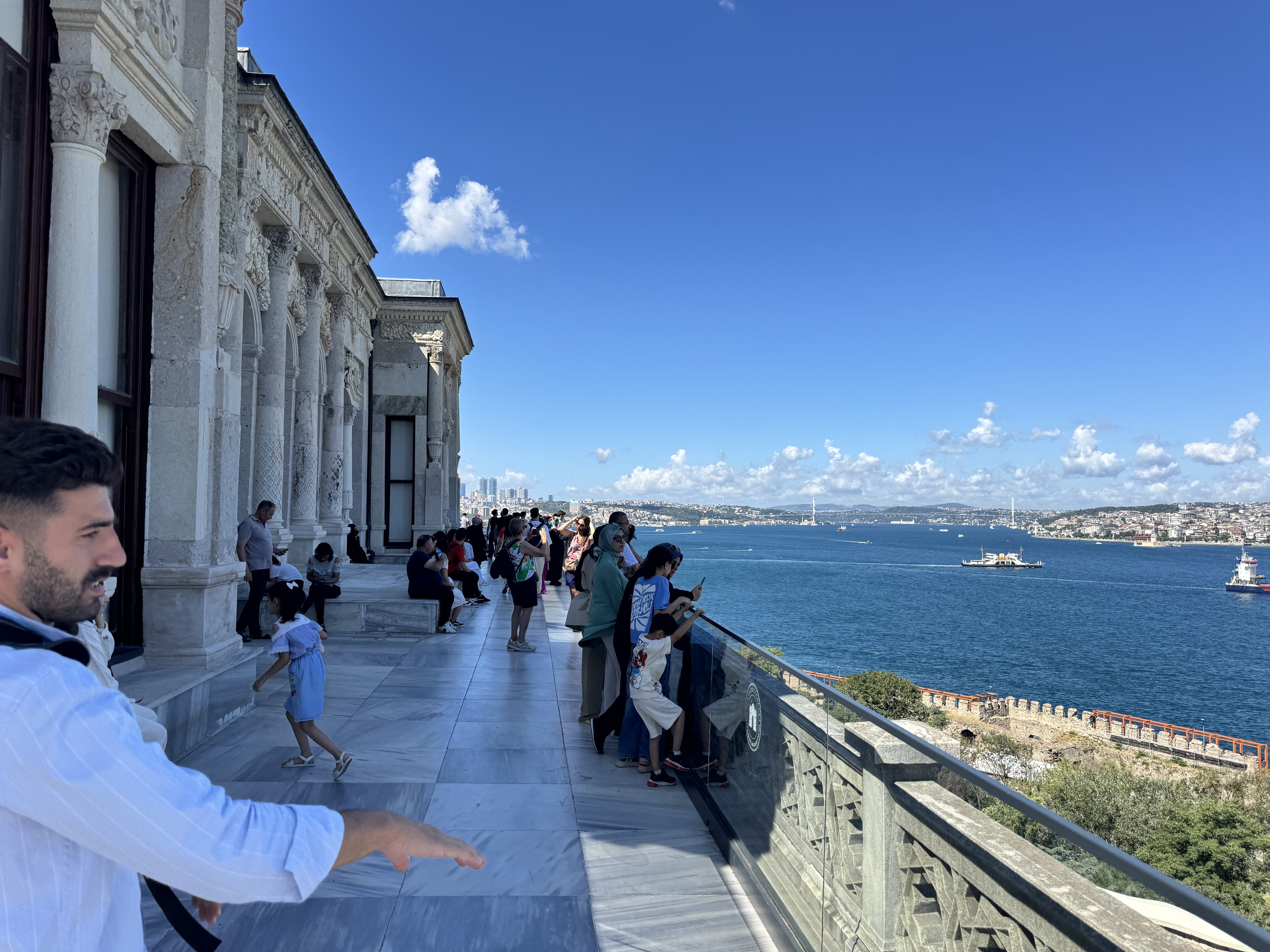
From its elevated position, the palace physically and symbolically sat above the city
02

Wealth on Display

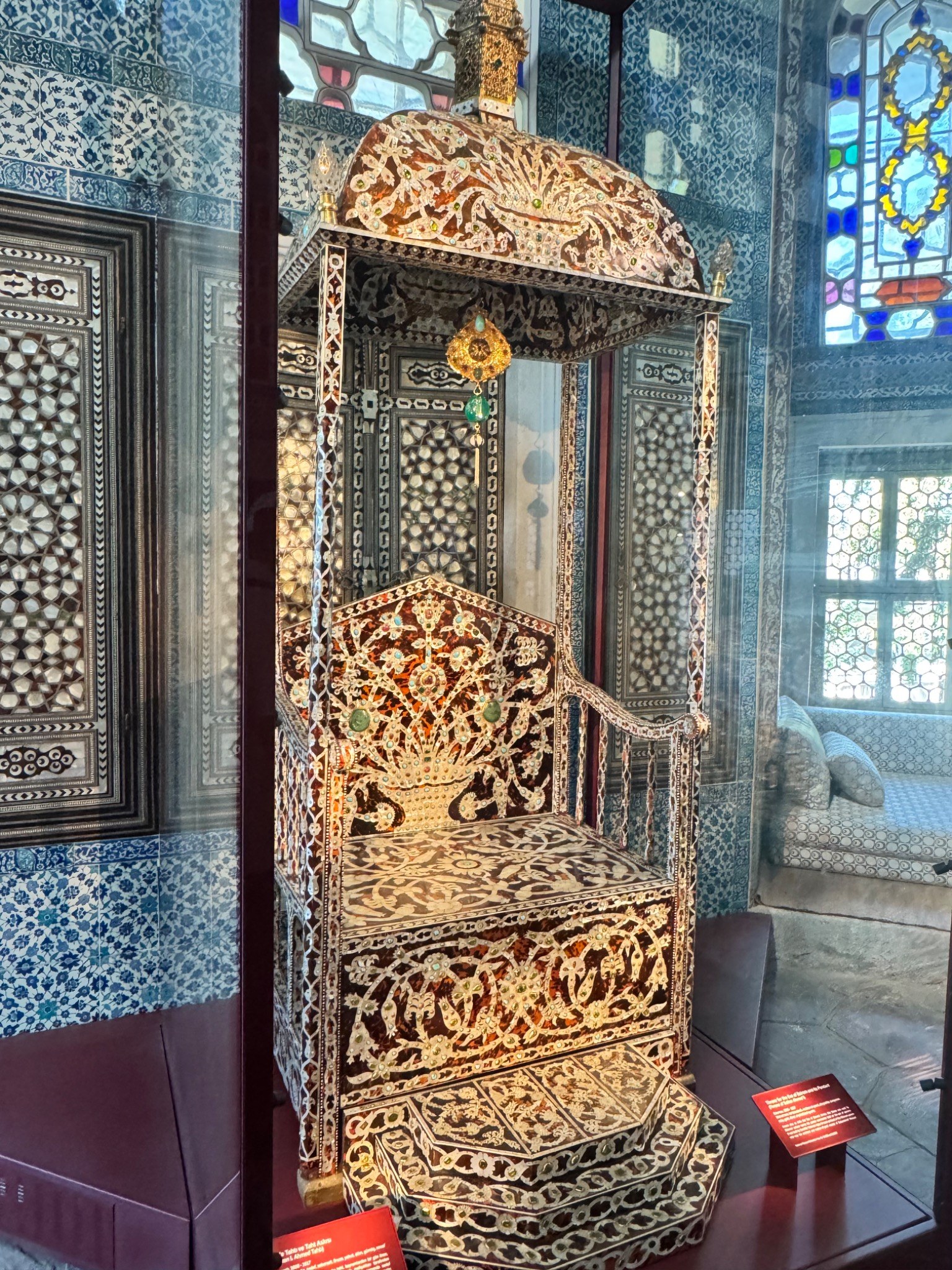
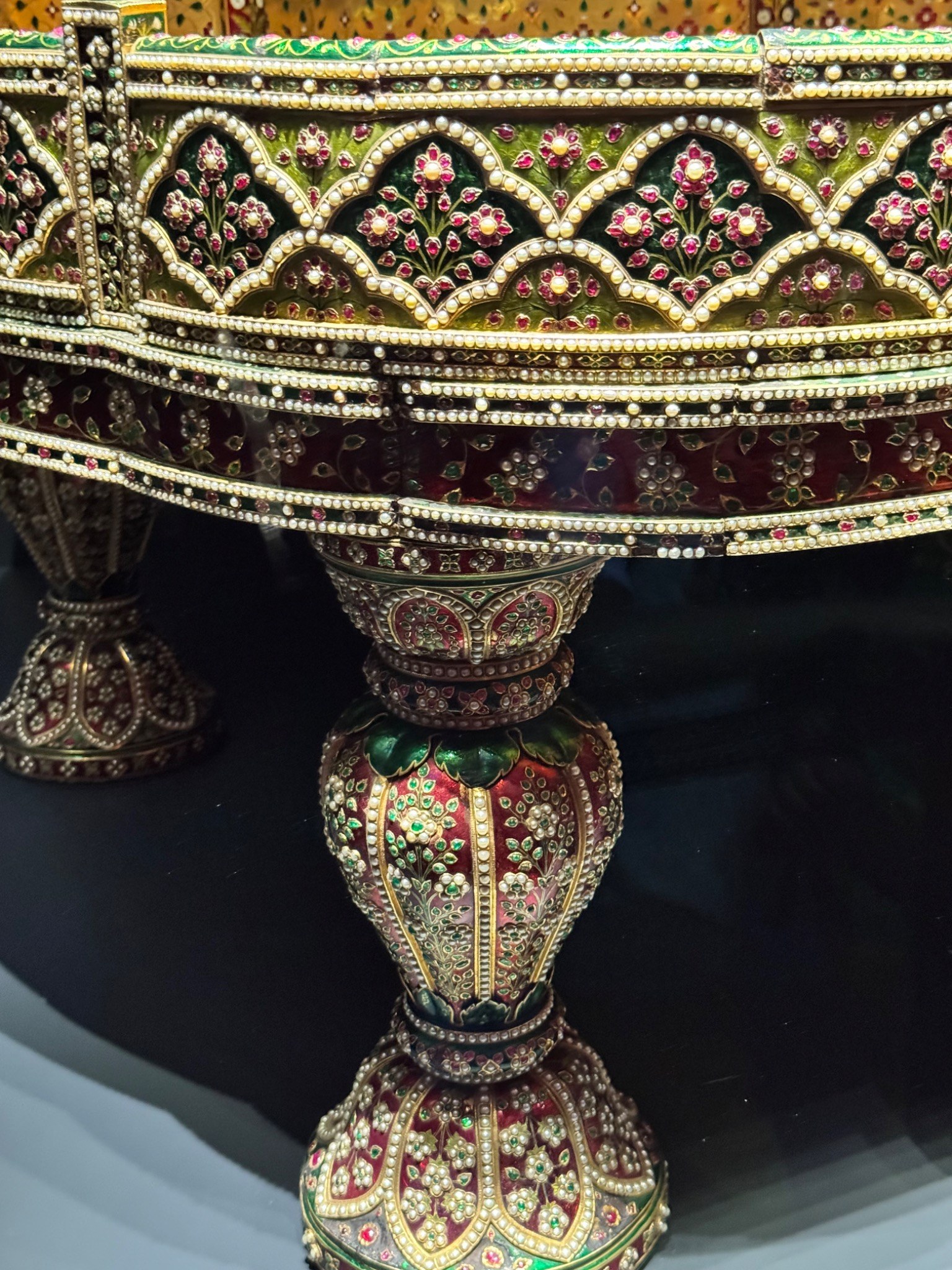
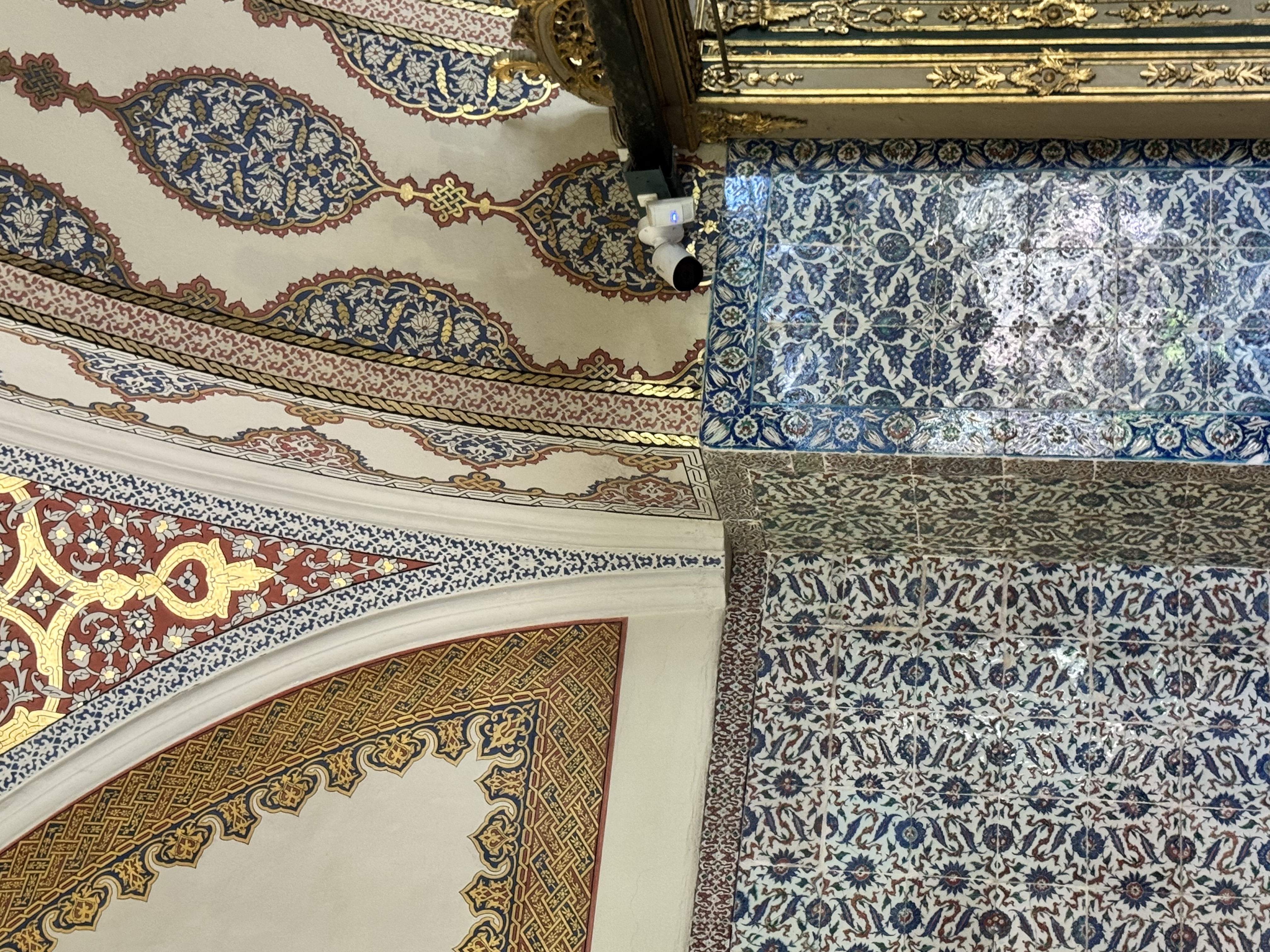
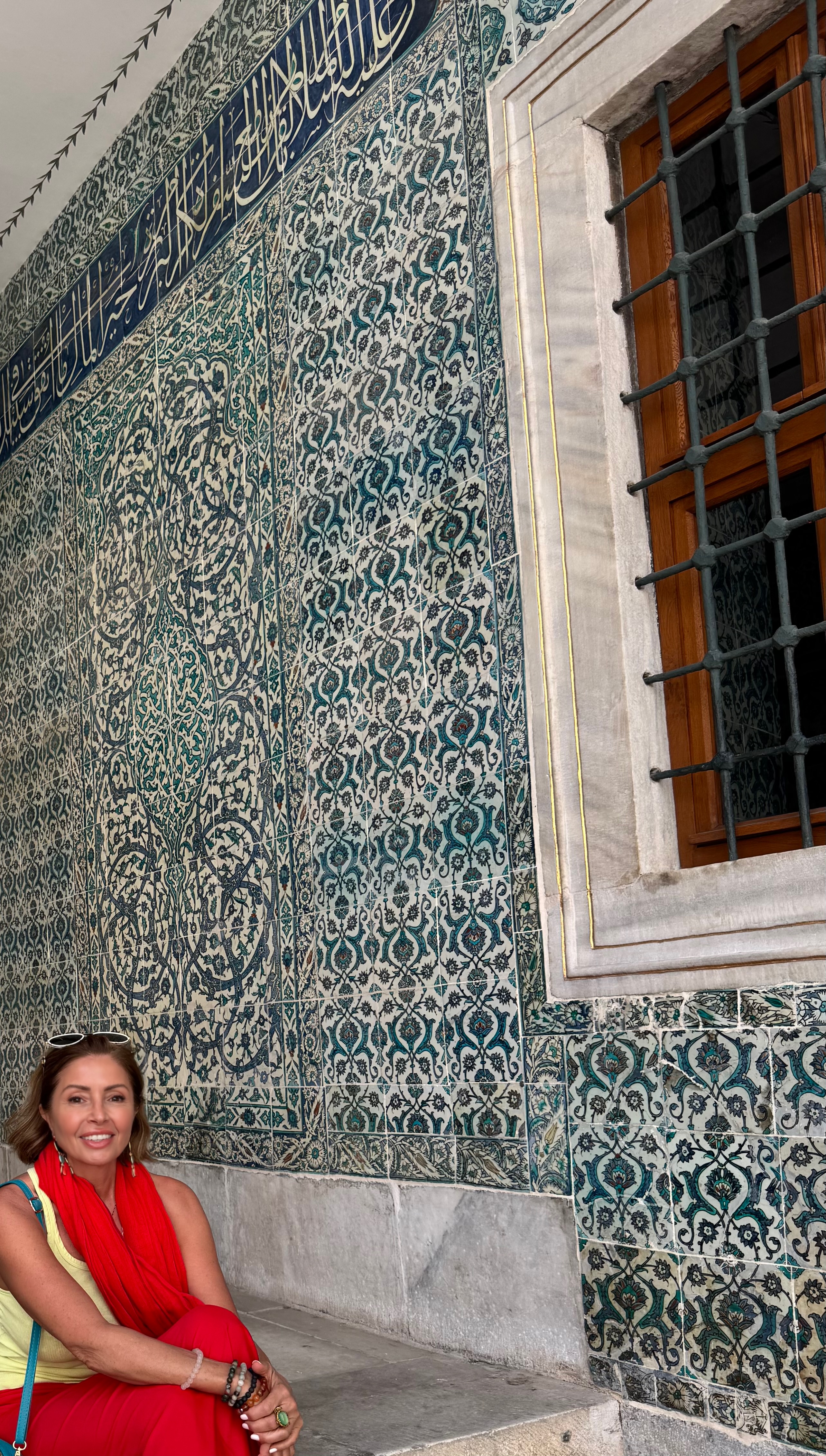
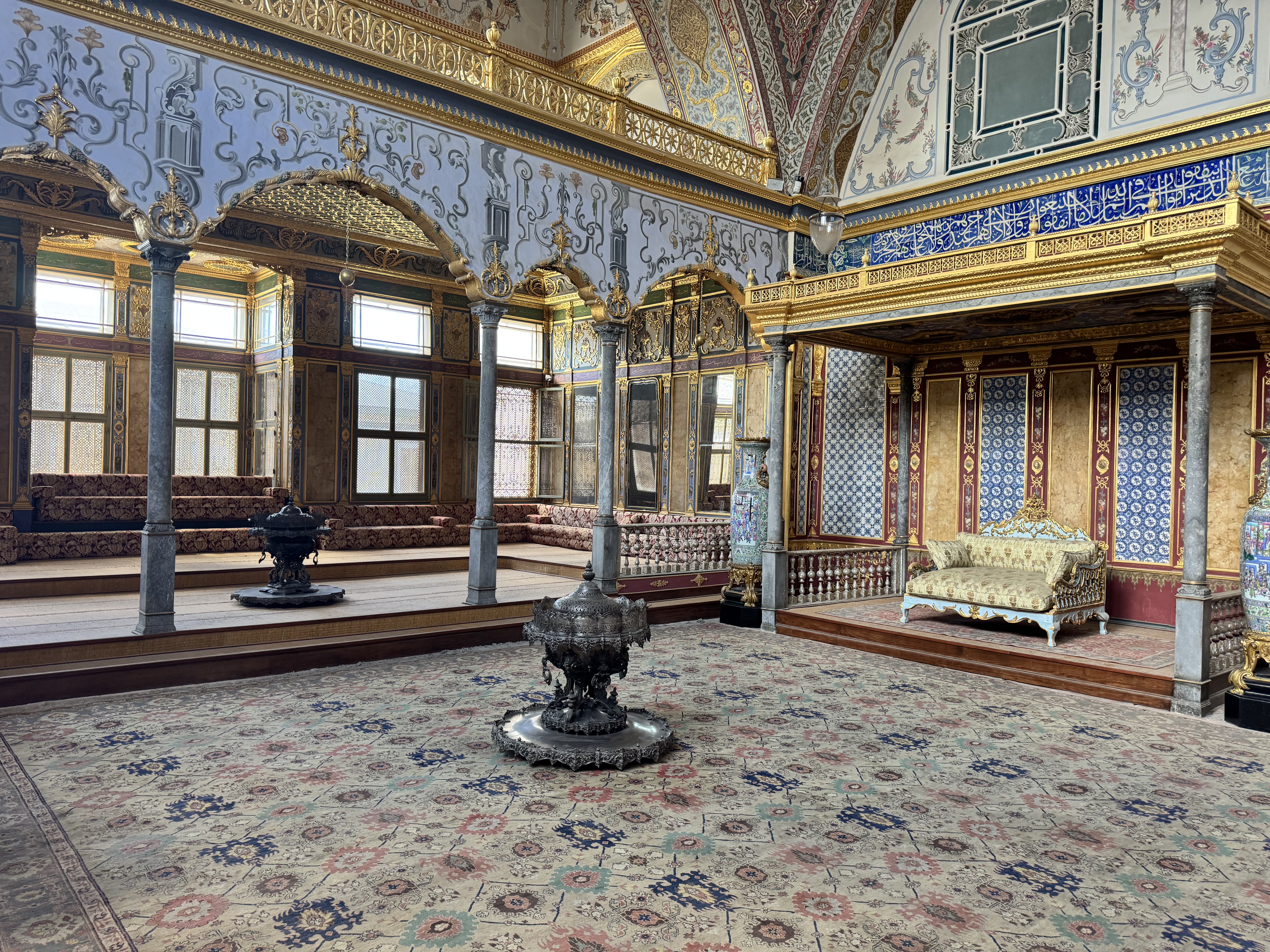
What struck me throughout the palace was the extraordinary attention to craftsmanship. Handmade tiles cover walls in intricate patterns. Gold leaf appears in ceilings, columns and decorative details. Jewel-encrusted furniture, ceremonial objects and priceless artefacts fill room after room.

Every surface feels considered. Every detail feels intentional. Yet unlike many modern luxury environments, the craftsmanship never feels excessive. The richness comes from skill, patience and artistry rather than scale alone.

There is a lesson in that distinction — between richness that comes from accumulation and richness that comes from mastery. Topkapi is the latter. It does not try to impress through quantity. It impresses through the quality of attention paid to every surface, every joint, every decorative choice.

Topkapi Palace detail
Craftsmanship that impresses through mastery rather than accumulation
Topkapi Palace ornament
Every surface feels considered — every detail intentional
Topkapi Palace tile work
Gold leaf, handmade tiles and jewel-encrusted detail throughout
03

Life Behind the Walls

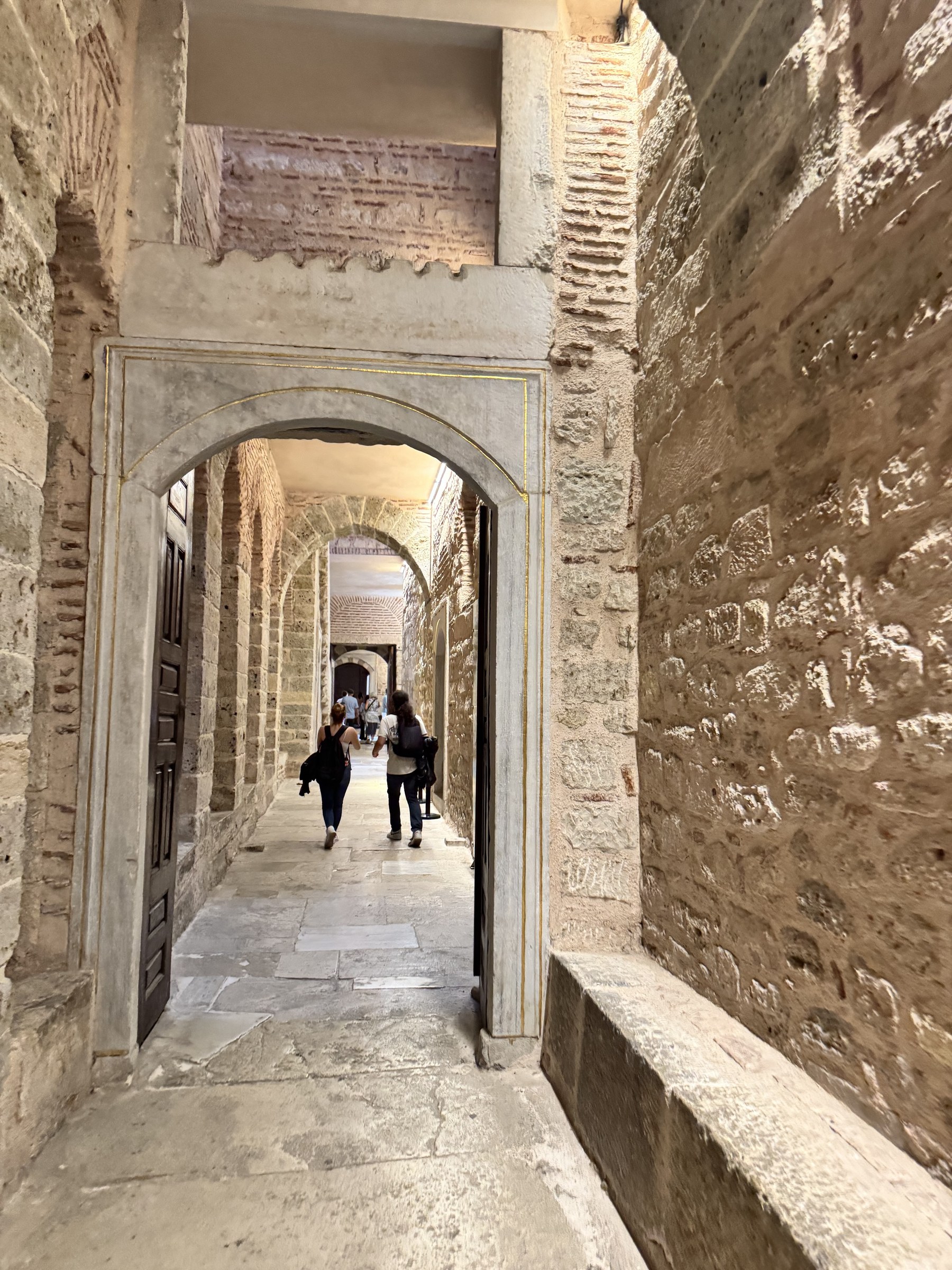
As I walked through the palace, I found myself imagining what life would have been like when these spaces were alive. The kitchens that fed an entire community. The private passages. The courtyards filled with movement and conversation. The grounds where animals were kept.

Every room hinted at stories that can never fully be told. Architecture has a unique ability to preserve traces of human life long after the people themselves have disappeared. Topkapi does this exceptionally well.

The spaces between the buildings are as memorable as the rooms themselves. Gardens and courtyards soften the formality of the palace architecture. Water, light and landscape play an active role throughout — not as decoration, but as structural elements of the experience.

Topkapi Palace interior
Detail, ornament and material richness — power expressed through craft

"Great places are not defined solely by buildings. They are defined by the relationship between buildings, landscape and human experience."

04

A Landscape of Peace

Wandering through the grounds amongst nature, I felt a remarkable sense of peace. For a place built around power, there is an unexpected calmness throughout the grounds. Large trees that have stood for generations provide shade across beautifully maintained gardens. Courtyards open toward views of the Bosphorus.

Water, light and landscape soften the formality of the architecture. The gardens are just as important as the rooms. The spaces between the buildings are just as memorable as the buildings themselves.

Topkapi Palace gardens
Topkapi Palace grounds
Topkapi Palace landscape
05

What Sydney Can Learn

Topkapi Palace does not impress through size. The rooms are not vast. The courtyards are not overwhelming. What stops you is the surface. The tile work. The gold leaf in a ceiling detail. The carved stone around a doorframe that took months to complete.

That is where the investment went. Not into scale, but into the quality of attention paid to every surface, every joint, every material choice. The richness comes from mastery, not accumulation. And the difference is immediately felt.

Sydney builds at scale. We know how to make things large. What we are less practised at is the decision to slow down — to spend more time and more money on the detail rather than the footprint. Topkapi is a reminder that the buildings people remember are rarely the biggest ones. They are the ones where someone cared deeply about what the surface felt like, what the material would look like in ten years, what it would mean to stand in front of it.

That is a different kind of ambition. And it is worth taking seriously.

Topkapi Palace
06

What I Brought Home

Walking away from Topkapi Palace, the reality of how temporary power really is becomes clear. The empire that built this extraordinary place no longer exists. The hierarchy that defined life here has disappeared. The privilege that once seemed permanent has dissolved into history.

Yet the architecture remains. The courtyards still provide moments of pause. The gardens still offer calm. The craftsmanship still inspires admiration. Buildings continue to create value long after the systems that produced them have vanished.

For those of us involved in shaping the built environment today, there is an important lesson in that. Buildings outlive business cycles. They outlive governments. They often outlive the ambitions of the people who commission them. What endures is not power. What endures is the quality of the places we leave behind.

Take This to the Round Table

A question worth eight perspectives:

"Are the buildings we're commissioning today built to outlive us — or are we designing for the business cycle rather than the century?"

Bring this question to a Circle8 Round Table →
A Note on How We Work

The Circle8 Global Design Series is not a travel blog. It's a research practice. When we visit a place like Topkapi Palace, we're looking at it through the lens of our work — the residential developments, commercial fitouts and construction projects we advise on in Australia. We're asking: what does this mean for us? What can we take back?

Sometimes the answer is a specific material or detail. Sometimes it's a principle. Sometimes it's just a recalibration of what's possible — a reminder that the standard we're holding ourselves to should be set by the best work being done anywhere in the world, not just the best work being done locally.

Istanbul gave us that recalibration. I hope this edition gives you something useful too.

Share this edition

Circle8 Global Design Series

The world's greatest environments inspire us to think differently.

More editions coming soon. In the meantime, let's talk about what great design could mean for your next project.

Next Edition: Blue Mosque → Start a Conversation